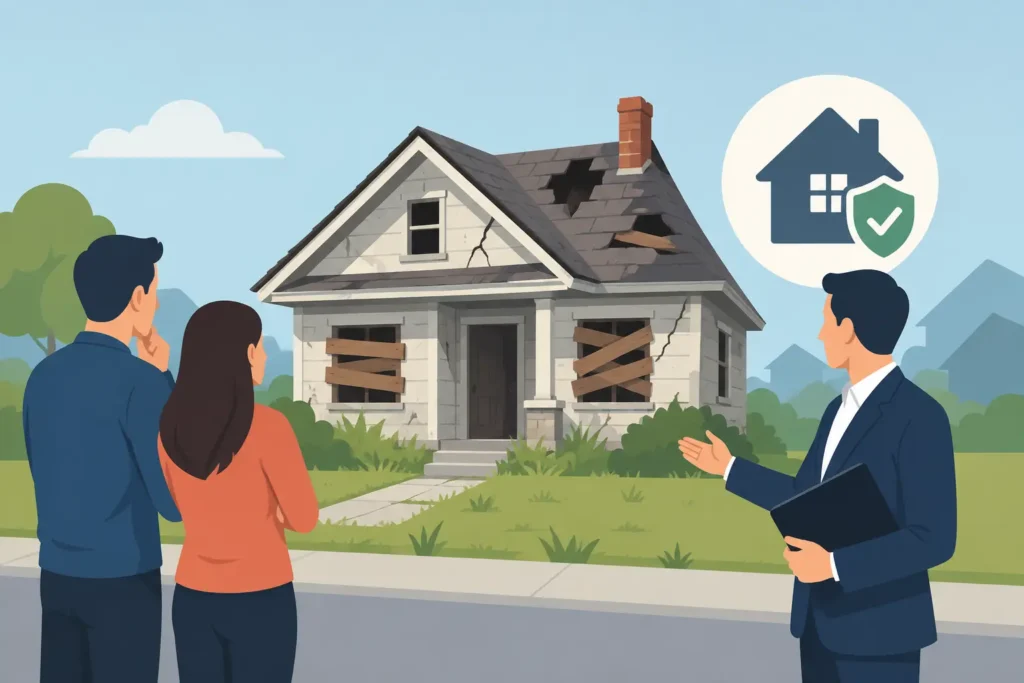
A condemnation notice can make a property feel impossible to sell. This condemned property selling guide is designed to give you a clear next step: understand what the notice means, identify what can legally be sold, and choose a path that fits your timeline and financial situation.
The word “condemned” is used in more than one way, and that distinction matters. Some homes are condemned because of serious code or safety violations. Others are affected by government acquisition, often called eminent domain. The right selling strategy depends on which situation you are facing, how far the process has progressed, and whether the property can be repaired or occupied.
What Does It Mean When a Property Is Condemned?
Most homeowners receive a condemnation notice after a city, county, or other authority finds conditions that make a home unsafe or unfit for occupancy. Common reasons include major fire or water damage, unstable structural components, dangerous electrical wiring, sewage issues, missing utilities, severe mold, or repeated code violations.
A condemnation order does not always mean the house must be demolished. In many cases, it means the property cannot be occupied until specific repairs are completed and inspections are passed. The notice should state the violations, required corrective work, deadlines, and the agency responsible for enforcement.
Government condemnation for public use is different. If an authority is acquiring your property for a road, utility project, redevelopment plan, or other public purpose, you may have rights to compensation and a defined legal process. Do not treat that situation like a routine distressed-property sale without first reviewing the documents and speaking with a qualified local attorney or appraiser.
Can You Sell a Condemned House?
Often, yes. A condemned house can frequently be sold as-is, particularly when the condemnation relates to repairable code issues. But the sale must be handled honestly. Buyers need to know about the notice, the violations, and any open permits, fines, liens, or deadlines connected to the property.
What you can sell and when you can close depends on local rules. Some municipalities allow an ownership transfer but hold the new owner responsible for correcting the violations. Others may require the property to be brought into compliance before certain approvals can be issued. If demolition has already been ordered or the government has taken title, your options may be more limited.
The practical question is not simply, “Can I sell?” It is, “What will a buyer need to take on?” A traditional retail buyer may struggle to get financing on an unsafe or uninhabitable home. A cash buyer who understands major repairs may be able to evaluate the property based on its current condition, repair scope, lot value, and local market.
Start With the Notice, Not the Repairs
When a home is condemned, many owners feel pressure to fix everything immediately. Sometimes repairs make financial sense. Other times, they create more debt and delay without producing a better outcome. Before spending money, get organized.
Collect the condemnation notice, inspection reports, code enforcement correspondence, repair estimates if you have them, property tax information, mortgage payoff details, and any records related to permits or prior repairs. If there are unpaid fines, utility balances, probate issues, or liens, include those documents too.
Then confirm the current status with the issuing agency. Ask whether the order prohibits occupancy, requires specific work, carries daily fines, has a hearing date, or includes a demolition deadline. Get names, dates, and instructions in writing where possible. Clear information protects you from making decisions based on assumptions.
Understand the Real Cost of Bringing It Up to Code
A repair estimate is not always the final cost. Older homes may reveal hidden damage once walls, flooring, or roofing are opened. A contractor may identify electrical, plumbing, foundation, or environmental issues that were not included in the original notice. Permits, engineering reports, inspections, temporary housing, and carrying costs can add up quickly.
If the home has a mortgage, calculate how long you can comfortably keep making payments while repairs are underway. If taxes, insurance, or fines are due, include those costs as well. The best path is the one that leaves you with the strongest practical outcome, not necessarily the one that looks best on paper.
Your Main Options for Selling a Condemned Property
There is no single best answer for every homeowner. Your equity, repair budget, deadline, location, and ability to manage construction all matter.
Repair and List With an Agent
Repairing the property may make sense when the violations are limited, you have funds available, and local sale prices support the investment. Once the home is safe and compliant, a conventional listing may attract more buyers and potentially bring a higher gross price.
The tradeoff is time and uncertainty. You may need contractors, permits, inspections, cleaning, staging, showings, buyer negotiations, and an appraisal. Even after the repairs are complete, a financed buyer can still request credits or have loan approval issues. This route is usually best when there is no urgent deadline and the repair work is manageable.
Sell As-Is to a Cash Buyer
An as-is sale can be a practical option when you do not want to repair, clean, list, or repeatedly show a damaged home. A direct buyer evaluates the home in its present condition and accounts for the cost and risk of repairs in the offer.
The tradeoff is straightforward: convenience and certainty generally come with a lower sale price than a fully repaired home might achieve on the open market. But a lower gross price is not automatically a worse financial result. Compare it with your repair costs, holding costs, agent commissions, seller-paid closing expenses, and the risk of further fines or deterioration.
A company such as You Win Estates may purchase qualifying homes as-is for cash, with a written offer and a closing date chosen around your needs. That can be especially helpful if the property is vacant, damaged, inherited, tenant-occupied, or becoming more expensive to hold each month.
Sell the Land or Redevelopment Opportunity
In some areas, the value is primarily in the lot rather than the building. This can be true when a house has extensive fire damage, major structural failure, or demolition orders. Builders, investors, and neighboring owners may evaluate the site differently than an ordinary homebuyer would.
Before assuming the lot has redevelopment value, check zoning, access, utility availability, flood conditions, lot dimensions, and demolition requirements. A buyer will factor these issues into the offer, so having accurate information helps prevent surprises later.
How to Evaluate an As-Is Offer
A legitimate cash offer should be clear about the price, the property being purchased, the closing timeline, and any conditions that still need to be satisfied. Read the purchase agreement carefully. If you do not understand a term, ask for an explanation before signing.
Pay attention to earnest money, inspection or due-diligence periods, assignment language, closing costs, title issues, and the party responsible for code violations or municipal requirements after closing. A buyer should not pressure you to sign immediately or avoid direct questions about the process.
You should also be cautious about offers that sound high but leave major costs undefined. A dependable transaction is built on clear paperwork, realistic expectations, and the buyer’s ability to close without waiting on lender approval.
Do Not Hide the Condemnation Status
Trying to sell without disclosing known condemnation or code issues can create serious problems. The buyer may discover the order through a title search, municipal records, inspection, or insurance inquiry. At that point, the sale can fall apart, and you may face disputes over disclosures.
Be direct about what you know. Share the notice and explain whether the home is occupied, vacant, secured, or accessible for inspection. Honest disclosure does not make a sale impossible. It allows the right buyer to evaluate the property accurately and make an offer that has a better chance of reaching the closing table.
A Clear Path Forward
A condemned property is a serious situation, but it does not erase your choices. Start by confirming the legal status of the home, gathering the paperwork, and calculating the true cost of repairs and delay. Then compare that path with a transparent as-is sale based on your actual priorities.
You do not have to take on a major renovation just because the house needs one. When speed, privacy, and relief matter most, a clear cash offer and a flexible closing can give you room to move forward with confidence.